

Eryniopsis lampyridarum
Eryniopsis lampyridarum (Thaxt.) Humber
Edibility
Edibility unknown — do not eat
Never eat a wild mushroom based on this site or any app.
Photos
-
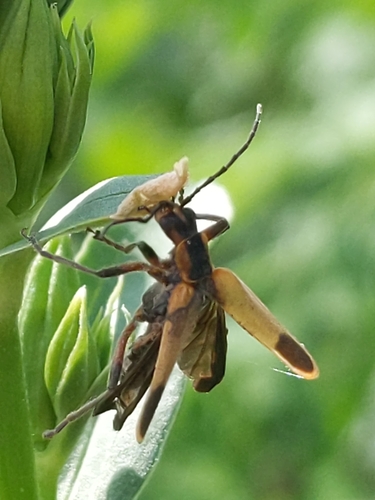
Photo: Cecil Smith. CC-BY. Source (inaturalist) -
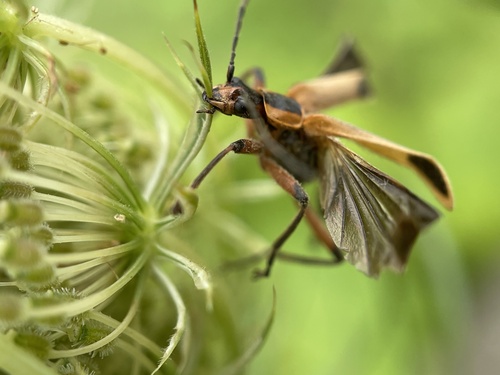
Photo: Engers. CC-BY. Source (inaturalist) -
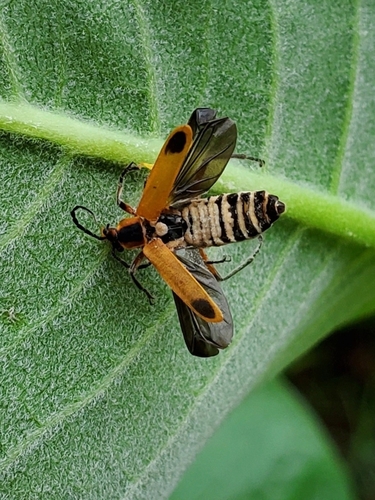
Photo: Will Kuhn. CC-BY. Source (inaturalist)
Lookalikes
No lookalikes are recorded for this species yet. That does not mean there are none. Many mushrooms look alike, so never rely on appearance alone.
Season
When this species has been recorded, by month, from open-licensed US and Canada observations. It shows when people report it, not a guarantee it is fruiting.
The highlighted bar is the current month.
View season data as a table
| Month | Records |
|---|---|
| January | 0 |
| February | 0 |
| March | 0 |
| April | 0 |
| May | 0 |
| June | 13 |
| July | 11 |
| August | 0 |
| September | 3 |
| October | 3 |
| November | 0 |
| December | 1 |
Where it is found
States and provinces with the most records. Check the foraging rules for the place you plan to visit.
- Tennessee 9 records · Foraging rules
- North Carolina 4 records · Foraging rules
- Indiana 3 records · Foraging rules
- Florida 2 records · Foraging rules
- Maryland 2 records · Foraging rules
- Virginia 2 records · Foraging rules
- Pennsylvania 1 records · Foraging rules
- Arkansas 1 records · Foraging rules
- West Virginia 1 records · Foraging rules
- Illinois 1 records · Foraging rules
- Kentucky 1 records · Foraging rules
- Missouri 1 records · Foraging rules
- Nebraska 1 records · Foraging rules
- Ohio 1 records · Foraging rules
About
Eryniopsis lampyridarum is an entomopathogenic fungus and its host is the soldier beetle, either Chauliognathus marginatus or Chauliognathus pensylvanicus. Eryniopsis lampyridarum is mind controlling for the soldier beetle and can manipulate the beetle into doing things that it wouldn't normally do. Once the fungus has established itself inside the beetle, it sends the infected beetle on a mission to find a specific daisy flower Asteraceae. The soldier beetle will clamp its mouthpiece onto the flower as tight as it can, while it awaits its death. The parasitic fungus forces the dead beetle to then spread its wings wide in a dramatic pose; this makes the beetle look bigger as if it is seeking out a mate. The fungus makes sure the dying beetle will attract more beetles so it can spread its spores. The fungus makes sure the beetle spreads its wings only at daybreak. It is also strange that the beetle will be dead for hours and then suddenly it will spread its wings at daylight, just in time to attract potential mates to its dead body. This is because the fungus is in control of the beetle's body functions. Then, when an uninfected beetle comes along to socialize with the dead beetle, the fungus' spores spread to the new beetle. Not all beetles will end up at a daisy flower. Some will die and fall to the ground. In this case, the parasitic fungus creates many spores that will be resistant to the environment and remain infective for many months. The spores will remain infective in the soil, awaiting the next season where they can infect more soldier beetles. This parasite was first discovered in North Carolina in the late 1970s, early 1980s. It has been found only in eastern and central North America, although its host, the soldier beetle, is found in southern Canada as well.
From Wikipedia, CC BY-SA 4.0. Read the original article.
Recent finds
No community finds tagged with this species yet. Log a find.
More in the genus Eryniopsis
Never eat a wild mushroom based on this site or any app. See safety basics and the disclaimer.