Spring Pin
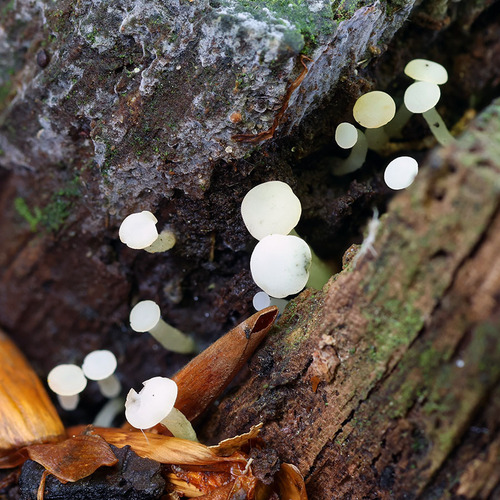
Cudoniella clavus (Alb. & Schwein.) Dennis
Edibility
Edibility unknown — do not eat
Never eat a wild mushroom based on this site or any app.
Photos
-
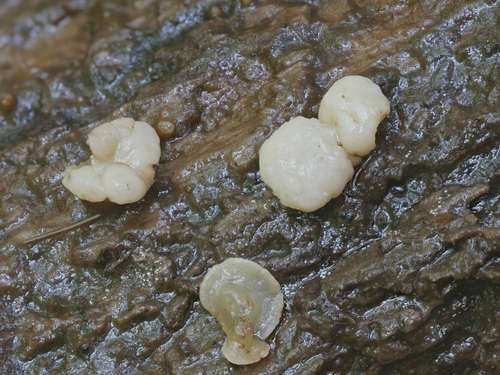
Photo: Garrett Taylor. CC0. Source (inaturalist) -
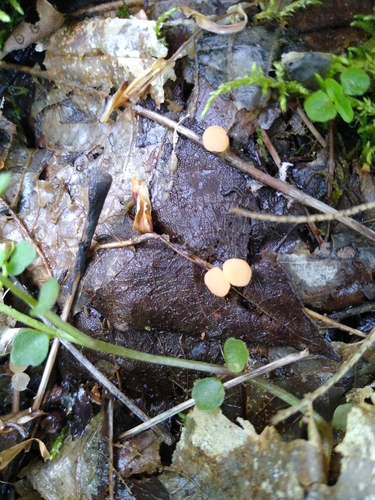
Photo: Garrett Taylor. CC0. Source (inaturalist) -

Photo: Garrett Taylor. CC0. Source (inaturalist)
Lookalikes
No lookalikes are recorded for this species yet. That does not mean there are none. Many mushrooms look alike, so never rely on appearance alone.
Season
When this species has been recorded, by month, from open-licensed US and Canada observations. It shows when people report it, not a guarantee it is fruiting.
The highlighted bar is the current month.
View season data as a table
| Month | Records |
|---|---|
| January | 0 |
| February | 0 |
| March | 2 |
| April | 7 |
| May | 50 |
| June | 53 |
| July | 11 |
| August | 7 |
| September | 8 |
| October | 4 |
| November | 2 |
| December | 0 |
Where it is found
States and provinces with the most records. Check the foraging rules for the place you plan to visit.
- New York 40 records · Foraging rules
- British Columbia 20 records · Foraging rules
- Massachusetts 17 records · Foraging rules
- Ontario 13 records · Foraging rules
- Pennsylvania 11 records · Foraging rules
- Colorado 7 records · Foraging rules
- Washington 7 records · Foraging rules
- North Carolina 6 records · Foraging rules
- Maryland 5 records · Foraging rules
- Michigan 5 records · Foraging rules
- Oregon 4 records · Foraging rules
- Quebec 3 records · Foraging rules
- California 3 records · Foraging rules
- West Virginia 3 records · Foraging rules
- New Hampshire 2 records · Foraging rules
Show 11 more
- Tennessee2 records
- Virginia2 records
- New Jersey2 records
- Delaware1 records
- Texas1 records
- Utah1 records
- Wyoming1 records
- Vermont1 records
- Kansas1 records
- Rhode Island1 records
- South Carolina1 records
About
Cudoniella clavus is a species of fungus in the family Helotiaceae. It was first described in 1805 by Johannes Baptista von Albertini and Lewis David de Schweinitz as Peziza clavus. British mycologist R. W. G. Dennis transferred it to Cudoniella in 1964. Fruit bodies of the jelly-like fungus consist of a disc-like cap measuring 0.4–1.2 cm (1⁄8–1⁄2 in) with a thin stipe. They are usually cream in colour, sometimes with hints of ochre or violet. They grow on rotting twigs, stems, leaves, and cones that are submerged in water. Cudoniella clavus is a widespread and common species. It is inedible.
From Wikipedia, CC BY-SA 4.0. Read the original article.
Recent finds
No community finds tagged with this species yet. Log a find.
More in the genus Cudoniella
-
Oak Pin
Cudoniella acicularis
Edibility unknown — do not eat - No photo yet
Cudoniella minima
Edibility unknown — do not eat - No photo yet
Cudoniella stagnalis
Edibility unknown — do not eat - No photo yet
Cudoniella borealis
Edibility unknown — do not eat - No photo yet
Cudoniella muscorum
Edibility unknown — do not eat
Never eat a wild mushroom based on this site or any app. See safety basics and the disclaimer.