

Black Chanterelle
Craterellus atrocinereus D.Arora & J.L.Frank
Safety first
Many edible mushrooms have toxic lookalikes, and some of those can be fatal. Have any mushroom identified in person by a local expert before you eat it.
If someone may have eaten a wild mushroom, call US Poison Control at 1-800-222-1222 or 911 right away. In Canada, call your provincial poison centre or 911.
Edibility
Edible (per source) Source: Wikipedia: Craterellus atrocinereus
Classification from Wikipedia: Craterellus atrocinereus. Sources can be wrong or incomplete, and people react differently.
Never eat a wild mushroom based on this site or any app.
Photos
-

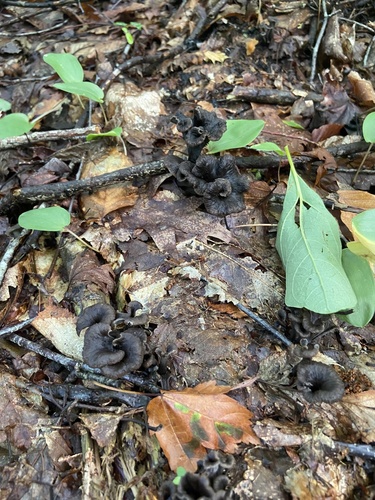
Photo: Marcus Tamura. CC0. Source (inaturalist) -
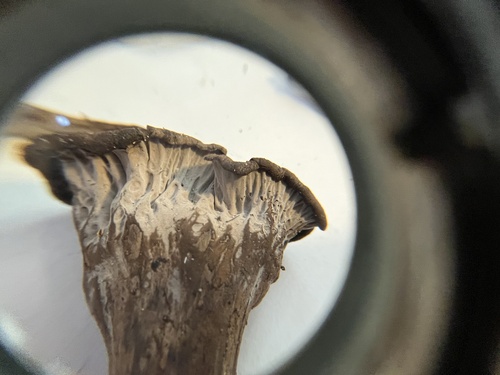
Photo: caseyhh. CC0. Source (inaturalist)
Lookalikes
No lookalikes are recorded for this species yet. That does not mean there are none. Many mushrooms look alike, so never rely on appearance alone.
Season
When this species has been recorded, by month, from open-licensed US and Canada observations. It shows when people report it, not a guarantee it is fruiting.
The highlighted bar is the current month.
View season data as a table
| Month | Records |
|---|---|
| January | 2 |
| February | 4 |
| March | 1 |
| April | 0 |
| May | 0 |
| June | 0 |
| July | 0 |
| August | 0 |
| September | 0 |
| October | 0 |
| November | 0 |
| December | 0 |
Where it is found
States and provinces with the most records. Check the foraging rules for the place you plan to visit.
- California 5 records · Foraging rules
Identification traits
| Cap shape | infundibuliform |
|---|---|
| Underside (gills, pores or teeth) | ridges |
| Ecology | mycorrhizal |
| Stem features | bare |
| Spore print color | white |
Traits vary. Use them to ask better questions of an expert, not to make a final call.
About
Craterellus atrocinereus, commonly known as the black chanterelle or California black chanterelle, is a species of edible fungus native to western North America. This uncommon species is a mycorrhizal associate of live oak, tanoak, and Oregon white oak in Oregon and northern California, where it is found most often in the vicinity of Monterey Bay. This species has a "fruity-cheesy" odor, and fruits in winter and spring. This bluish-gray to black chanterelle was previously considered to be Craterellus cinereus but was recognized as a distinct species in 2015. The specific name is a nod to C. cinereus, with the Latin prefix atro meaning dark and cinereus (akin to cinders) referring to its smoky gray coloration.
From Wikipedia, CC BY-SA 4.0. Read the original article.
Recent finds
No community finds tagged with this species yet. Log a find.
More in the genus Craterellus
-
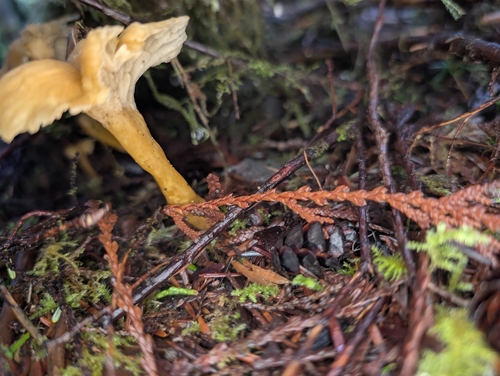
Trumpet Chanterelle
Craterellus tubaeformis
Edible (per source) -
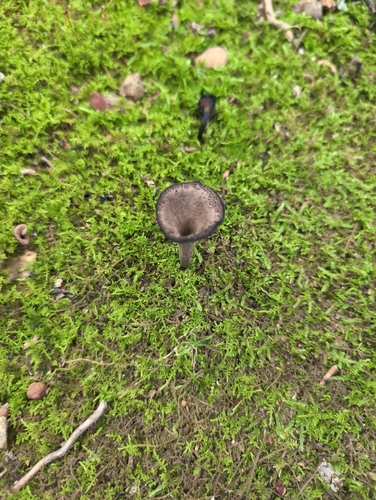
Horn Of Plenty
Craterellus cornucopioides
Edible (per source) -
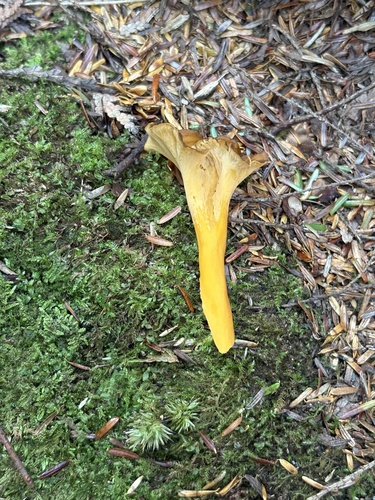
Golden Chanterelle
Craterellus lutescens
Edible (per source) -
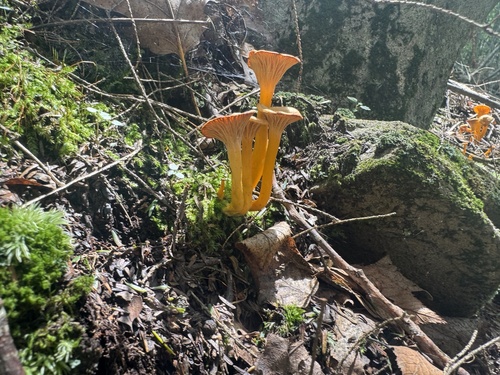
flame chanterelle
Craterellus ignicolor
Edible (per source) -
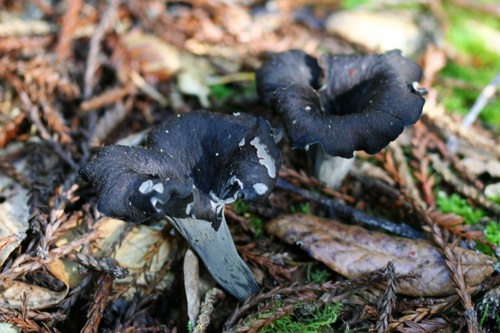
California Black Trumpet
Craterellus calicornucopioides
Edible (per source) -
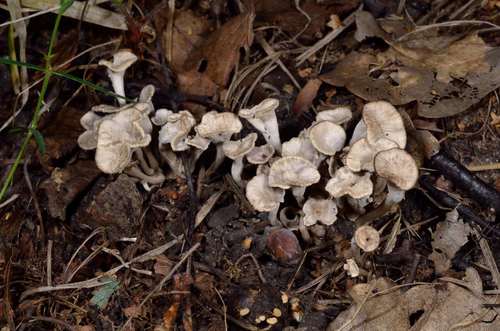
sinuous chanterelle
Craterellus undulatus
Edibility unknown — do not eat -
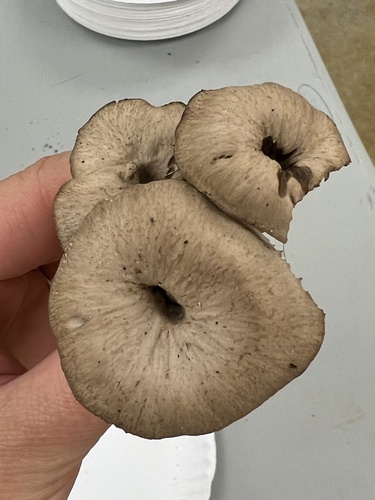
Fragrant Black Trumpet
Craterellus foetidus
Edibility unknown — do not eat -
Cerulean Black Trumpet
Craterellus caeruleofuscus
Edibility unknown — do not eat
Never eat a wild mushroom based on this site or any app. See safety basics and the disclaimer.