

Cortinarius ohlone
Cortinarius ohlone Bojantchev
Edibility
Edibility unknown — do not eat
Never eat a wild mushroom based on this site or any app.
Photos
-

Photo: Alan Rockefeller. CC-BY. Source (inaturalist) -

Photo: Jonathan Curley. CC-BY. Source (inaturalist) -

Photo: Alex Heyman. CC0. Source (inaturalist) -
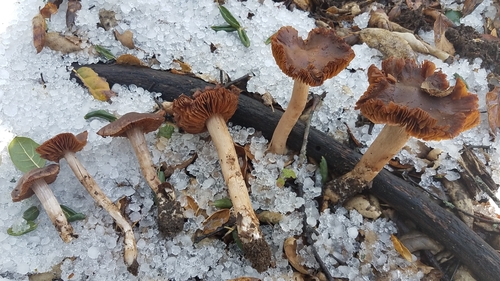
Photo: Alan Rockefeller. CC-BY. Source (inaturalist)
Lookalikes
No lookalikes are recorded for this species yet. That does not mean there are none. Many mushrooms look alike, so never rely on appearance alone.
Season
When this species has been recorded, by month, from open-licensed US and Canada observations. It shows when people report it, not a guarantee it is fruiting.
The highlighted bar is the current month.
View season data as a table
| Month | Records |
|---|---|
| January | 30 |
| February | 16 |
| March | 4 |
| April | 1 |
| May | 1 |
| June | 4 |
| July | 0 |
| August | 0 |
| September | 0 |
| October | 1 |
| November | 0 |
| December | 6 |
Where it is found
States and provinces with the most records. Check the foraging rules for the place you plan to visit.
- California 38 records · Foraging rules
About
Cortinarius ohlone is a basidiomycete mushroom of the genus Cortinarius. Found in California, it was described as new to science in 2013 by Dimitar Bojantchev. The specific epithet refers to the Ohlone Native American people of California, who formerly inhabited the oak woods where the type collection was made. The brownish cap is up to 8 centimetres (3+1⁄4 in) wide, and the gills are tannish. The stem is up to 10 cm (4 in) long and 2 cm (3⁄4 in) thick. The spore print is rusty brown. The flesh of the cap is brown, while that of the stem is whitish. It is similar to a number of other members of Cortinarius subgenus Telamonia. From December to January, the species can be found on the ground under oak from Butte County to southern California.
From Wikipedia, CC BY-SA 4.0. Read the original article.
Recent finds
No community finds tagged with this species yet. Log a find.
More in the genus Cortinarius
-

Cortinarius casimirii
Edibility unknown — do not eat -
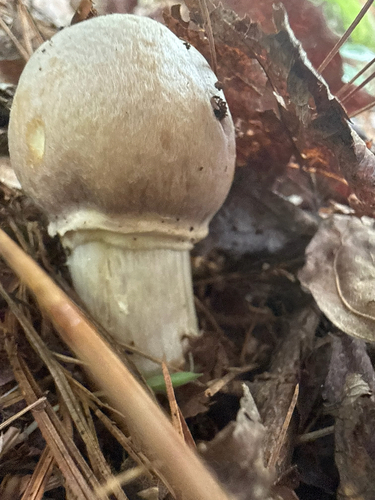
The Gypsy
Cortinarius caperatus
Edible (per source) -
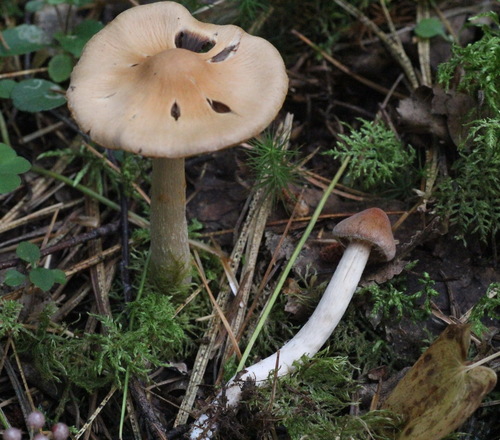
Blunt Webcap
Cortinarius obtusus
Edibility unknown — do not eat -
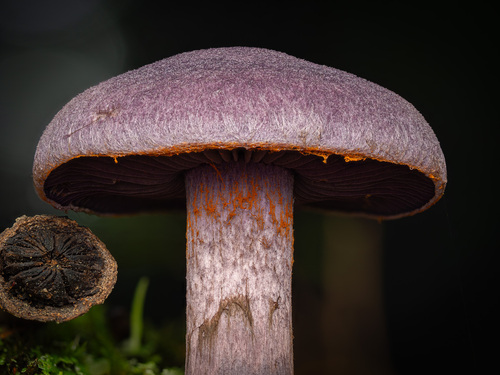
Violet Webcap
Cortinarius violaceus
Caution -
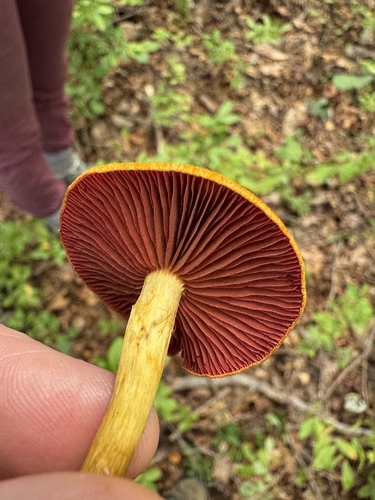
Surprise Webcap
Cortinarius semisanguineus
Edibility unknown — do not eat -
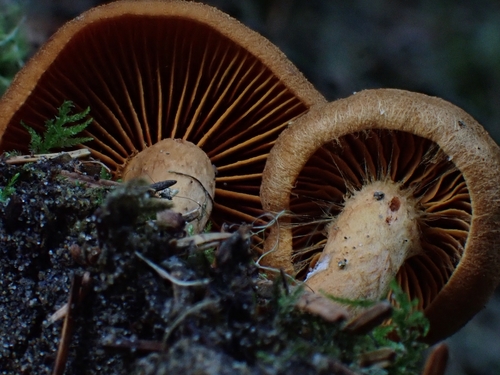
Cinnamon Webcap
Cortinarius cinnamomeus
Caution -
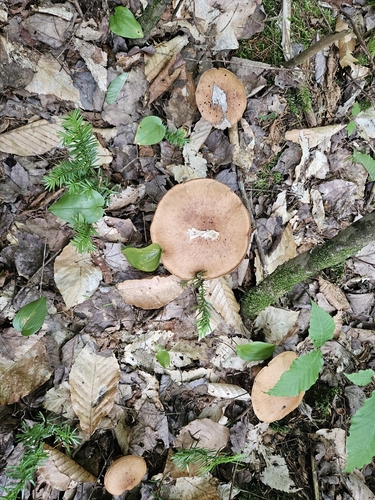
Red Banded Webcap
Cortinarius armillatus
Caution -
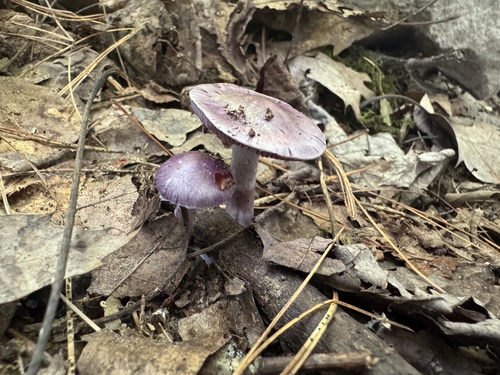
Viscid Violet Cort
Cortinarius iodes
Edibility unknown — do not eat
Never eat a wild mushroom based on this site or any app. See safety basics and the disclaimer.