

Lawyer's Wig
Coprinus comatus (O.F.Müll.) Pers.
Also called: Shaggy Inkcap, Shaggy Ink-Cap, Shaggy Ink Cap, Lawyers' wig, Shaggy Mane
Safety first
Many edible mushrooms have toxic lookalikes, and some of those can be fatal. Have any mushroom identified in person by a local expert before you eat it.
If someone may have eaten a wild mushroom, call US Poison Control at 1-800-222-1222 or 911 right away. In Canada, call your provincial poison centre or 911.
Edibility
Edible (per source) Source: Wikipedia: Coprinus comatus
Classification from Wikipedia: Coprinus comatus. Sources can be wrong or incomplete, and people react differently.
Never eat a wild mushroom based on this site or any app.
Photos
-
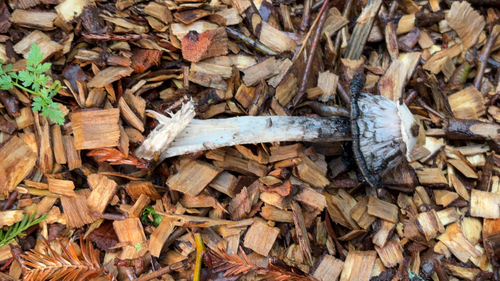
Photo: kdcs. CC-BY. Source (inaturalist) -
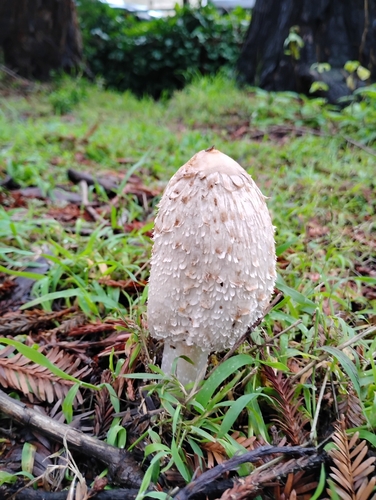
Photo: P Holroyd. CC-BY. Source (inaturalist) -
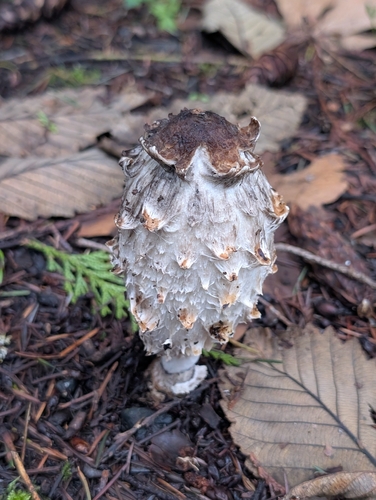
Photo: Spencer Champion. CC-BY. Source (inaturalist) -
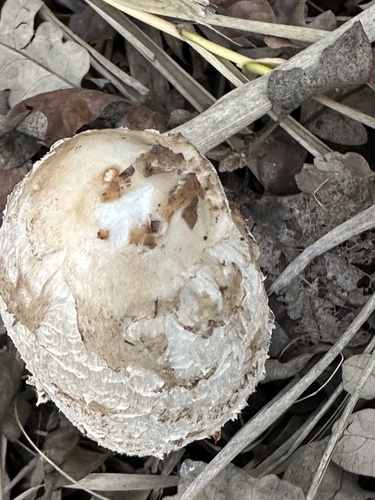
Photo: Irina Mitine. CC-BY. Source (inaturalist)
Lookalikes
No lookalikes are recorded for this species yet. That does not mean there are none. Many mushrooms look alike, so never rely on appearance alone.
Season
When this species has been recorded, by month, from open-licensed US and Canada observations. It shows when people report it, not a guarantee it is fruiting.
The highlighted bar is the current month.
View season data as a table
| Month | Records |
|---|---|
| January | 75 |
| February | 39 |
| March | 59 |
| April | 107 |
| May | 130 |
| June | 82 |
| July | 94 |
| August | 161 |
| September | 601 |
| October | 1,244 |
| November | 401 |
| December | 140 |
Where it is found
States and provinces with the most records. Check the foraging rules for the place you plan to visit.
- California 431 records · Foraging rules
- British Columbia 295 records · Foraging rules
- Ontario 283 records · Foraging rules
- New York 165 records · Foraging rules
- Washington 164 records · Foraging rules
- Pennsylvania 101 records · Foraging rules
- Quebec 89 records · Foraging rules
- Ohio 84 records · Foraging rules
- Oregon 78 records · Foraging rules
- Utah 77 records · Foraging rules
- Colorado 73 records · Foraging rules
- Michigan 71 records · Foraging rules
- Alberta 68 records · Foraging rules
- Vermont 68 records · Foraging rules
- Illinois 63 records · Foraging rules
Show 47 more
- Manitoba59 records
- Minnesota54 records
- Texas54 records
- Wisconsin45 records
- Alaska41 records
- Massachusetts37 records
- Maryland30 records
- Nova Scotia30 records
- Indiana28 records
- Virginia28 records
- Wyoming27 records
- Saskatchewan26 records
- Tennessee24 records
- North Carolina23 records
- Yukon23 records
- Idaho22 records
- New Brunswick21 records
- Missouri17 records
- South Dakota15 records
- Arizona14 records
- Prince Edward Island14 records
- North Dakota13 records
- Delaware12 records
- Kansas11 records
- Kentucky11 records
- Montana11 records
- New Mexico11 records
- West Virginia11 records
- Maine10 records
- Newfoundland and Labrador10 records
- Northwest Territories10 records
- Connecticut9 records
- Iowa9 records
- Oklahoma9 records
- Louisiana8 records
- Nebraska8 records
- New Hampshire6 records
- New Jersey6 records
- District of Columbia5 records
- Nevada5 records
- Alabama4 records
- Florida4 records
- Georgia4 records
- Mississippi2 records
- Rhode Island2 records
- Arkansas1 records
- Hawaii1 records
Identification traits
| Cap shape | conical |
|---|---|
| Underside (gills, pores or teeth) | gills |
| Ecology | saprotrophic |
| Stem features | ring |
| Spore print color | black |
Traits vary. Use them to ask better questions of an expert, not to make a final call.
About
Coprinus comatus, commonly known as the shaggy ink cap, lawyer's wig, or shaggy mane, is a species of fungus. The young fruit bodies first appear as white cylinders emerging from the ground, then the bell-shaped caps open out. The white caps are covered with scales, the origin of its common names. The gills beneath the cap are white, then pink, then turn black. This mushroom is unusual because it will turn black and dissolve itself in a matter of hours after being picked or depositing spores. The mushroom is often seen growing about lawns, gravel roads, and waste areas in the Northern Hemisphere and more locally in the Southern Hemisphere. When young it is an excellent edible mushroom but it spoils quickly and resembles some poisonous species.
From Wikipedia, CC BY-SA 4.0. Read the original article.
Never eat a wild mushroom based on this site or any app. See safety basics and the disclaimer.