

Star-tipped Reindeer Lichen
Cladonia stellaris (Opiz) Pouzar & Vĕzda
Edibility
Edibility unknown — do not eat
Never eat a wild mushroom based on this site or any app.
Photos
-
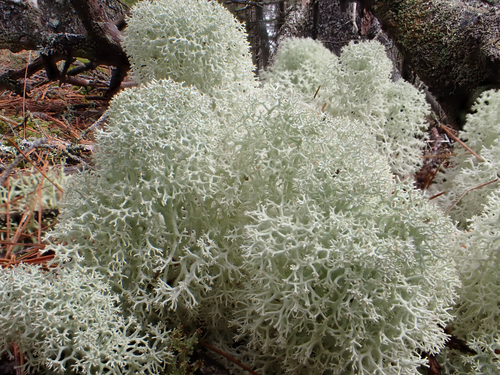
Photo: Eli Talhouk. CC-BY. Source (inaturalist) -
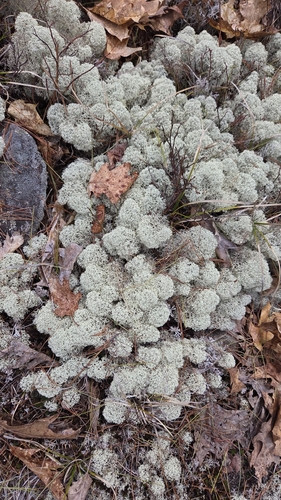
Photo: Asia Ruby Fuoco. CC-BY. Source (inaturalist) -
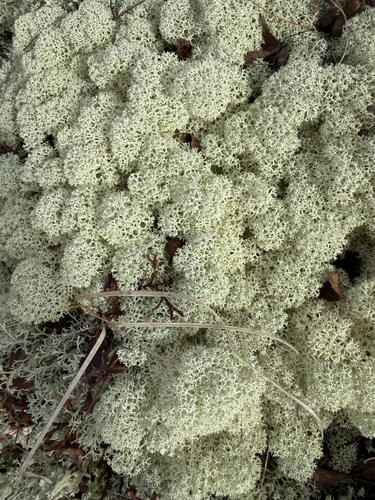
Photo: Eli Talhouk. CC-BY. Source (inaturalist) -
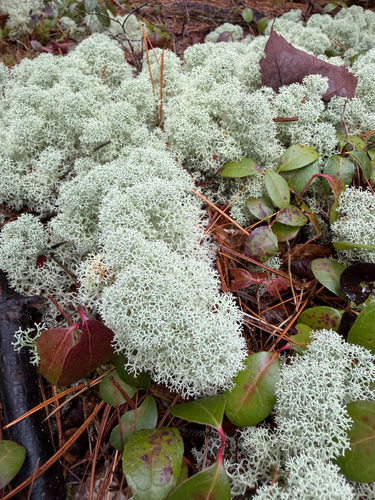
Photo: Eli Talhouk. CC-BY. Source (inaturalist)
Lookalikes
No lookalikes are recorded for this species yet. That does not mean there are none. Many mushrooms look alike, so never rely on appearance alone.
Season
When this species has been recorded, by month, from open-licensed US and Canada observations. It shows when people report it, not a guarantee it is fruiting.
The highlighted bar is the current month.
View season data as a table
| Month | Records |
|---|---|
| January | 87 |
| February | 15 |
| March | 24 |
| April | 72 |
| May | 215 |
| June | 644 |
| July | 1,316 |
| August | 898 |
| September | 326 |
| October | 121 |
| November | 32 |
| December | 24 |
Where it is found
States and provinces with the most records. Check the foraging rules for the place you plan to visit.
- Alaska 526 records · Foraging rules
- Quebec 526 records · Foraging rules
- Ontario 490 records · Foraging rules
- Maine 250 records · Foraging rules
- Northwest Territories 241 records · Foraging rules
- Minnesota 236 records · Foraging rules
- Michigan 218 records · Foraging rules
- Newfoundland and Labrador 212 records · Foraging rules
- British Columbia 193 records · Foraging rules
- Manitoba 174 records · Foraging rules
- Nova Scotia 168 records · Foraging rules
- New Hampshire 107 records · Foraging rules
- Yukon 96 records · Foraging rules
- New Brunswick 85 records · Foraging rules
- Massachusetts 82 records · Foraging rules
Show 27 more
- New York59 records
- Alberta55 records
- Nunavut50 records
- Saskatchewan31 records
- Vermont30 records
- Missouri21 records
- Wisconsin20 records
- West Virginia13 records
- North Carolina10 records
- Prince Edward Island8 records
- Florida7 records
- Pennsylvania7 records
- Oregon6 records
- Connecticut5 records
- Virginia4 records
- Georgia3 records
- Maryland3 records
- Rhode Island3 records
- California2 records
- Ohio2 records
- Washington2 records
- Arkansas1 records
- Colorado1 records
- Hawaii1 records
- Iowa1 records
- Kansas1 records
- Montana1 records
About
Cladonia stellaris (star-tipped cup lichen or star reindeer lichen) is an ecologically important species of cup lichen that forms continuous mats over large areas of the ground in boreal and arctic regions around the circumpolar north. The species is a preferred food source of reindeer and caribou during the winter months, and it has an important role in regulating nutrient cycling and soil microbiological communities. Like many other lichens, Cladonia stellaris is used by humans directly for its chemical properties, as many of the secondary metabolites are antimicrobial (e.g., Usnic acid), but it also has the unique distinction of being harvested and sold as 'fake trees' for model train displays. It is also used as a sound absorber in interior design. The species is also harvested in large quantities for ornamental use and as fodder for semi-domestic reindeer herds. The fungal portion of Cladonia stellaris, the mycobiont, protects the lichen from lichenivores, superfluous solar radiation, and other kinds of stressors in their ecosystem. Cladonia stellaris is described as mat-forming and fruticose (shrub-like) in appearance, and as terrestrial, terricolous, or epigeic, because it grows on the surface of bare soil or gravel. Like most other lichens, Cladonia stellaris grows slowly, averaging less than 0.5 cm per year under good conditions. This species differs from the similar Cladonia rangiferina and Cladonia arbuscula in that it forms much more distinct cushion-shaped patches, and appears to have denser branching when viewed from above. In Nepal, Cladonia stellaris has been reported from 4,400 to 4,500 m elevation in a compilation of published records; this reported range lies above the tree line used in the study. After an online vote sponsored by the Canadian Museum of Nature, the star-tipped cup lichen was unofficially crowned Canada's national lichen.
From Wikipedia, CC BY-SA 4.0. Read the original article.
More in the genus Cladonia
-

Reindeer Moss
Cladonia rangiferina
Edibility unknown — do not eat -

Smooth Cladonia
Cladonia gracilis
Edibility unknown — do not eat -

British soldier lichen
Cladonia cristatella
Edibility unknown — do not eat -

Dragon Horn
Cladonia squamosa
Edibility unknown — do not eat -

Many-forked Cladonia
Cladonia furcata
Edibility unknown — do not eat -

Thorn Lichen
Cladonia uncialis
Edibility unknown — do not eat -

Mealy Pixie-cup
Cladonia chlorophaea
Edibility unknown — do not eat -

Common Powderhorn
Cladonia coniocraea
Edibility unknown — do not eat
Never eat a wild mushroom based on this site or any app. See safety basics and the disclaimer.