

Lipstick Powderhorn
Cladonia macilenta Hoffm.
Also called: cup lichen
Edibility
Edibility unknown — do not eat
Never eat a wild mushroom based on this site or any app.
Photos
-
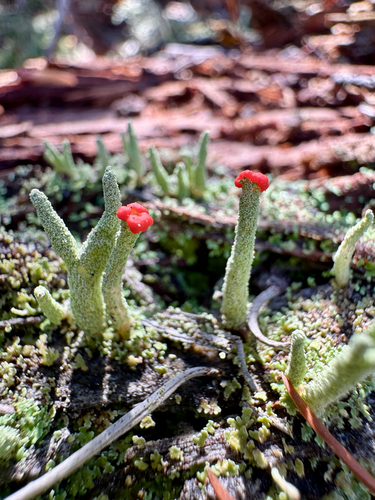
Photo: Karen Guin. CC-BY. Source (inaturalist) -
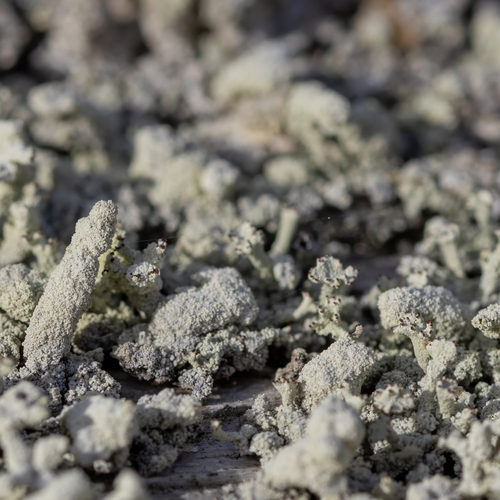
Photo: Dan Vickers. CC-BY. Source (inaturalist) -
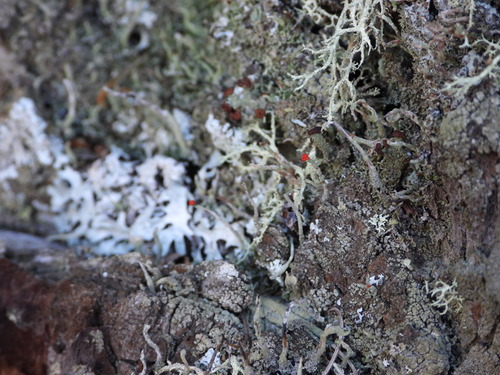
Photo: Charlie Pavlisich. CC-BY. Source (inaturalist) -
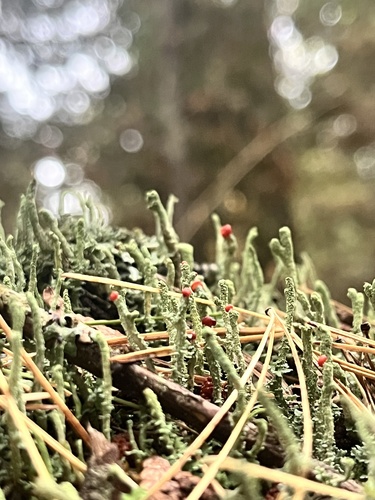
Photo: Maleah Upton. CC0. Source (inaturalist)
Lookalikes
No lookalikes are recorded for this species yet. That does not mean there are none. Many mushrooms look alike, so never rely on appearance alone.
Season
When this species has been recorded, by month, from open-licensed US and Canada observations. It shows when people report it, not a guarantee it is fruiting.
The highlighted bar is the current month.
View season data as a table
| Month | Records |
|---|---|
| January | 83 |
| February | 65 |
| March | 113 |
| April | 133 |
| May | 183 |
| June | 241 |
| July | 375 |
| August | 301 |
| September | 191 |
| October | 149 |
| November | 92 |
| December | 72 |
Where it is found
States and provinces with the most records. Check the foraging rules for the place you plan to visit.
- Minnesota 208 records · Foraging rules
- British Columbia 193 records · Foraging rules
- Washington 166 records · Foraging rules
- California 141 records · Foraging rules
- Virginia 127 records · Foraging rules
- Ontario 127 records · Foraging rules
- Massachusetts 118 records · Foraging rules
- Pennsylvania 95 records · Foraging rules
- Michigan 90 records · Foraging rules
- North Carolina 89 records · Foraging rules
- Maryland 73 records · Foraging rules
- New Jersey 63 records · Foraging rules
- Maine 59 records · Foraging rules
- Tennessee 55 records · Foraging rules
- New York 53 records · Foraging rules
Show 41 more
- Wisconsin48 records
- West Virginia43 records
- Florida41 records
- New Hampshire40 records
- Oregon35 records
- Vermont34 records
- Connecticut30 records
- Alaska30 records
- Ohio24 records
- Quebec24 records
- Iowa21 records
- Newfoundland and Labrador19 records
- Manitoba17 records
- Indiana13 records
- Louisiana12 records
- Missouri11 records
- South Carolina10 records
- Illinois8 records
- North Dakota8 records
- Nova Scotia8 records
- New Brunswick7 records
- Idaho5 records
- New Mexico5 records
- Northwest Territories5 records
- South Dakota5 records
- Arkansas5 records
- Rhode Island4 records
- Alabama4 records
- Texas4 records
- Wyoming4 records
- Alberta4 records
- Arizona3 records
- Georgia3 records
- Hawaii3 records
- Colorado2 records
- Delaware2 records
- District of Columbia2 records
- Nebraska2 records
- Kentucky1 records
- Montana1 records
- Yukon1 records
About
Cladonia macilenta or the lipstick cup lichen is a species of cup lichen in the family Cladoniaceae. The species is red listed in Iceland as an endangered species (EN). While it is found in various regions of the UK, it is considered potentially threatened in parts of the lowlands due to habitat loss. Verrucaster lichenicola, described by Friedrich Tobler in 1913, was proposed to be a fungus with waxy pycnidia and hyaline conidia lacking septa. It was, however, a little-known taxon, as the type specimen was lost and not collected again. The rediscovery of the type material more than a century later revealed that what Tobler thought to be a lichenicolous fungus was instead pycnidia of Cladonia macilenta, and thus the two taxa are placed in synonymy.
From Wikipedia, CC BY-SA 4.0. Read the original article.
More in the genus Cladonia
-

Reindeer Moss
Cladonia rangiferina
Edibility unknown — do not eat -

Smooth Cladonia
Cladonia gracilis
Edibility unknown — do not eat -

British soldier lichen
Cladonia cristatella
Edibility unknown — do not eat -

Dragon Horn
Cladonia squamosa
Edibility unknown — do not eat -

Many-forked Cladonia
Cladonia furcata
Edibility unknown — do not eat -

Thorn Lichen
Cladonia uncialis
Edibility unknown — do not eat -

Mealy Pixie-cup
Cladonia chlorophaea
Edibility unknown — do not eat -

Common Powderhorn
Cladonia coniocraea
Edibility unknown — do not eat
Never eat a wild mushroom based on this site or any app. See safety basics and the disclaimer.