

Gray's Cup Lichen
Cladonia grayi G.Merr. ex Sandst.
Also called: Gray’s Pixie-cup Lichen
Edibility
Edibility unknown — do not eat
Never eat a wild mushroom based on this site or any app.
Photos
-
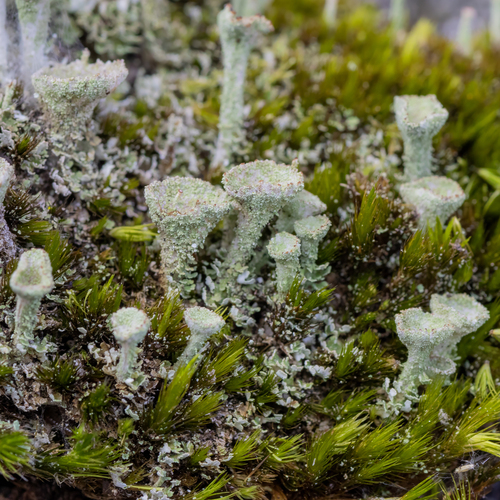
Photo: Dan Vickers. CC-BY. Source (inaturalist) -
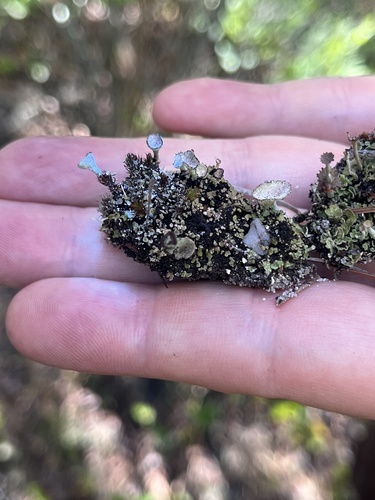
Photo: Bonnie Isaac. CC0. Source (inaturalist) -
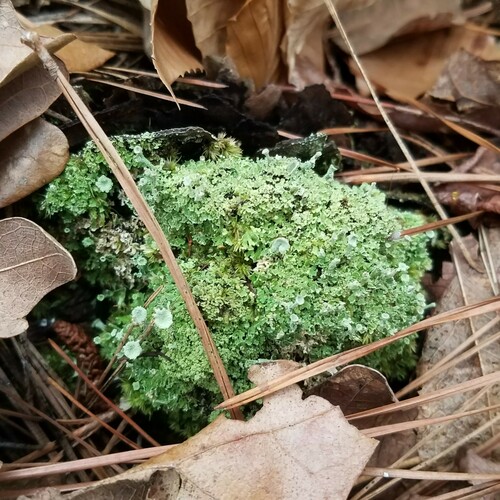
Photo: Leila Dasher. CC-BY. Source (inaturalist) -
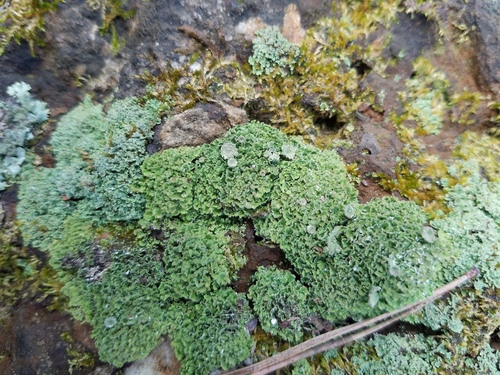
Photo: Leila Dasher. CC-BY. Source (inaturalist)
Lookalikes
No lookalikes are recorded for this species yet. That does not mean there are none. Many mushrooms look alike, so never rely on appearance alone.
Season
When this species has been recorded, by month, from open-licensed US and Canada observations. It shows when people report it, not a guarantee it is fruiting.
The highlighted bar is the current month.
View season data as a table
| Month | Records |
|---|---|
| January | 183 |
| February | 134 |
| March | 236 |
| April | 232 |
| May | 263 |
| June | 341 |
| July | 434 |
| August | 328 |
| September | 355 |
| October | 334 |
| November | 200 |
| December | 129 |
Where it is found
States and provinces with the most records. Check the foraging rules for the place you plan to visit.
- Maryland 542 records · Foraging rules
- Virginia 423 records · Foraging rules
- Pennsylvania 199 records · Foraging rules
- North Carolina 183 records · Foraging rules
- Massachusetts 171 records · Foraging rules
- New Jersey 163 records · Foraging rules
- Minnesota 142 records · Foraging rules
- Maine 127 records · Foraging rules
- Michigan 122 records · Foraging rules
- Missouri 106 records · Foraging rules
- Ontario 96 records · Foraging rules
- West Virginia 93 records · Foraging rules
- Ohio 81 records · Foraging rules
- Connecticut 76 records · Foraging rules
- Tennessee 69 records · Foraging rules
Show 41 more
- New York65 records
- Arkansas62 records
- Georgia59 records
- Kentucky46 records
- Alabama44 records
- Quebec42 records
- Nova Scotia39 records
- Alaska37 records
- New Brunswick36 records
- Wisconsin35 records
- Delaware31 records
- Vermont31 records
- Illinois25 records
- District of Columbia20 records
- Kansas17 records
- Newfoundland and Labrador16 records
- Louisiana15 records
- New Hampshire15 records
- Iowa15 records
- Indiana12 records
- Manitoba11 records
- Oklahoma11 records
- Texas11 records
- South Carolina10 records
- Florida9 records
- British Columbia9 records
- Rhode Island4 records
- Nebraska2 records
- Northwest Territories2 records
- Prince Edward Island2 records
- South Dakota2 records
- Washington2 records
- Yukon2 records
- California2 records
- Colorado2 records
- Mississippi2 records
- Arizona1 records
- Hawaii1 records
- North Dakota1 records
- Nunavut1 records
- Alberta1 records
About
Cladonia grayi, commonly known as Gray's cup lichen or Gray's pixie cup, is a species of fruticose lichen in the family Cladoniaceae. It is characterised by small, leaf-like squamules forming its primary thallus and distinctive upright podetia (5–15 mm tall) that develop into goblet-shaped cups. The species contains several unique lichen substances, primarily grayanic acid, which causes it to glow light blue under ultraviolet light, and has also been found to produce protective pyrrolopyrazine compounds. Its photobiont is the green algal species Asterochloris glomerata. The fungal component shows distinctive growth responses during development that occur only when encountering compatible algal cells, with the fungus growing extremely slowly at ≤1 cm per year in culture. Though found worldwide, C. grayi is most abundant in Arctic and temperate regions of the Northern Hemisphere. It typically grows on acidic substrates including rotting wood, organic soil layers, and bare ground, showing particular abundance in pine forests across a range of humidity conditions. Two chemical variants (chemotypes) have been documented: one containing only grayanic acid and 4-O-demethylgrayanic acid, and another that additionally contains substances of the fumarprotocetraric acid complex.
From Wikipedia, CC BY-SA 4.0. Read the original article.
More in the genus Cladonia
-

Reindeer Moss
Cladonia rangiferina
Edibility unknown — do not eat -

Smooth Cladonia
Cladonia gracilis
Edibility unknown — do not eat -

British soldier lichen
Cladonia cristatella
Edibility unknown — do not eat -

Dragon Horn
Cladonia squamosa
Edibility unknown — do not eat -

Many-forked Cladonia
Cladonia furcata
Edibility unknown — do not eat -

Thorn Lichen
Cladonia uncialis
Edibility unknown — do not eat -

Mealy Pixie-cup
Cladonia chlorophaea
Edibility unknown — do not eat -

Common Powderhorn
Cladonia coniocraea
Edibility unknown — do not eat
Never eat a wild mushroom based on this site or any app. See safety basics and the disclaimer.