

Cantharellus tabernensis
Cantharellus tabernensis Feib. & Cibula
Edibility
Edibility unknown — do not eat
Never eat a wild mushroom based on this site or any app.
Photos
-
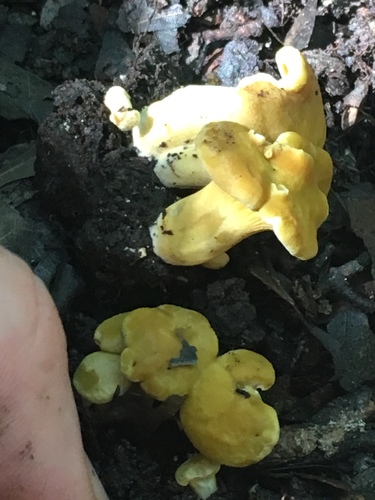
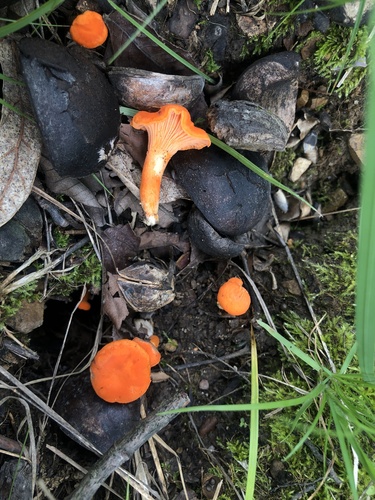
Photo: pynklynx. CC0. Source (inaturalist) -
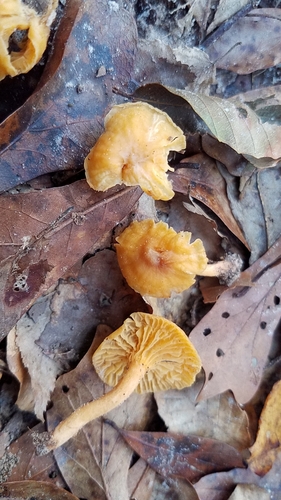
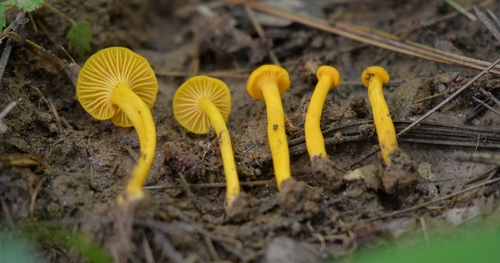
Photo: Alan Rockefeller. CC-BY. Source (inaturalist) -
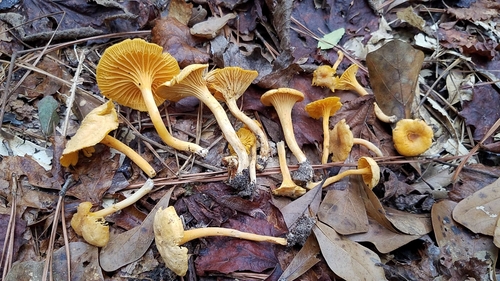
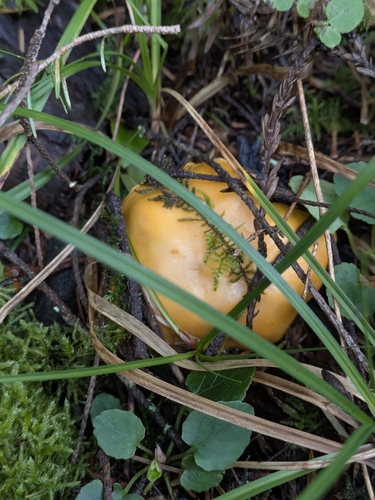
Photo: Alan Rockefeller. CC-BY. Source (inaturalist)
Lookalikes
No lookalikes are recorded for this species yet. That does not mean there are none. Many mushrooms look alike, so never rely on appearance alone.
Season
When this species has been recorded, by month, from open-licensed US and Canada observations. It shows when people report it, not a guarantee it is fruiting.
The highlighted bar is the current month.
View season data as a table
| Month | Records |
|---|---|
| January | 0 |
| February | 0 |
| March | 1 |
| April | 0 |
| May | 1 |
| June | 13 |
| July | 35 |
| August | 6 |
| September | 6 |
| October | 1 |
| November | 1 |
| December | 0 |
Where it is found
States and provinces with the most records. Check the foraging rules for the place you plan to visit.
- Texas 35 records · Foraging rules
- Mississippi 21 records · Foraging rules
- Louisiana 4 records · Foraging rules
- Florida 1 records · Foraging rules
About
Cantharellus tabernensis is a species of fungus in the family Cantharellaceae that was described as new to science in 1996. It is found in the southern United States, where it grows in mixed pine and hardwood forests, close to mature Pinus elliottii trees. Fruit bodies have a yellowish-brown cap with a slightly darker brown center, and a bright orange gills and stipe. The specific epithet tabernensis refers to the meeting house at the Stennis Space Center Recreation area, near the type locality.
From Wikipedia, CC BY-SA 4.0. Read the original article.
Recent finds
No community finds tagged with this species yet. Log a find.
More in the genus Cantharellus
-
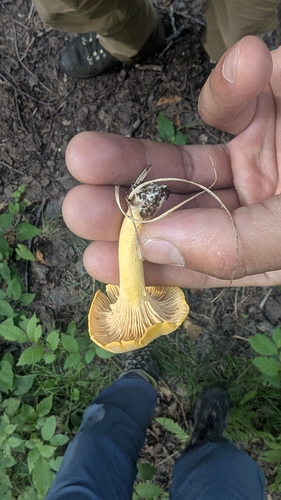
Chanterelle
Cantharellus cibarius
Edible (per source) -
Cinnabar Chanterelle
Cantharellus cinnabarinus
Edible (per source) -
Small Chanterelle
Cantharellus minor
Edible (per source) -
Pacific Golden Chanterelle
Cantharellus formosus
Edible (per source) -
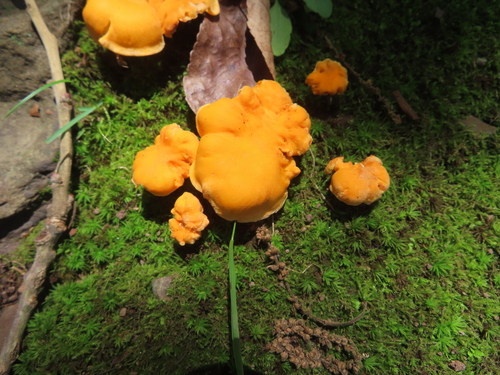
Smooth Chanterelle
Cantharellus lateritius
Edible (per source) -
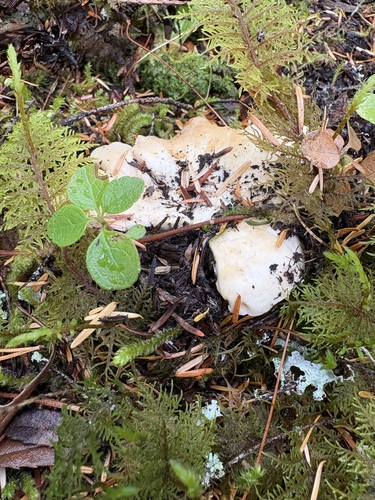
White Chanterelle
Cantharellus subalbidus
Edible (per source) - No photo yet
Cantharellus cinereus
Edibility unknown — do not eat -
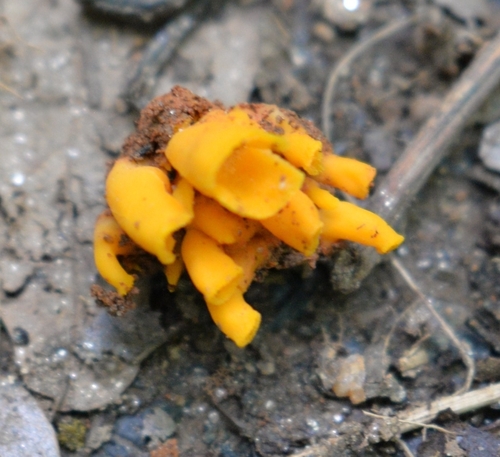
Fragrant Chanterelle
Cantharellus odoratus
Edibility unknown — do not eat
Never eat a wild mushroom based on this site or any app. See safety basics and the disclaimer.