

Olive Lute
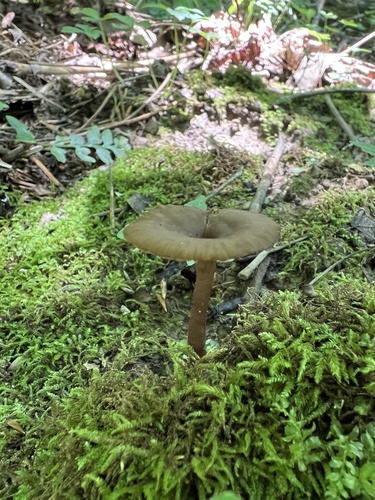
Callistosporium luteo-olivaceum (Berk. & M.A.Curtis) Singer
Edibility
Edibility unknown — do not eat
Never eat a wild mushroom based on this site or any app.
Photos
-
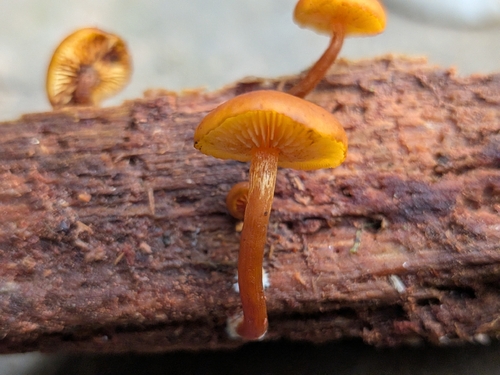
Photo: Drew Palmer. CC-BY. Source (inaturalist) -
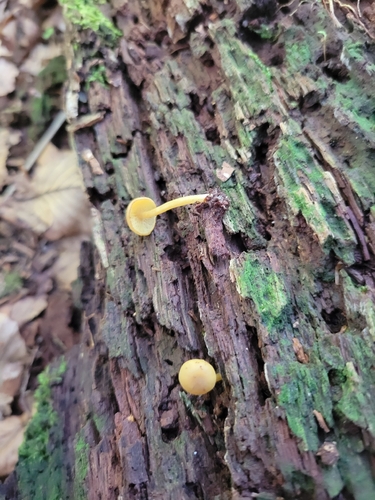
Photo: Harry Mazariego. CC0. Source (inaturalist) -
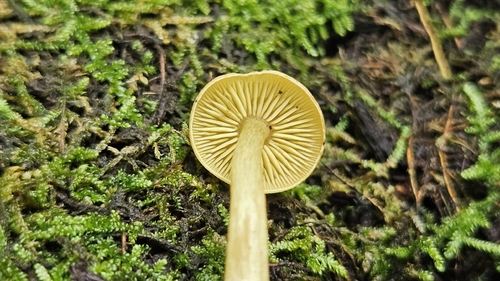
Photo: Sam Bucciarelli. CC-BY. Source (inaturalist) -
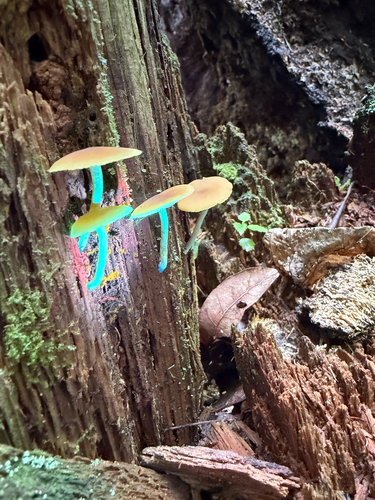
Photo: Nat Gorka. CC-BY. Source (inaturalist)
Lookalikes
No lookalikes are recorded for this species yet. That does not mean there are none. Many mushrooms look alike, so never rely on appearance alone.
Season
When this species has been recorded, by month, from open-licensed US and Canada observations. It shows when people report it, not a guarantee it is fruiting.
The highlighted bar is the current month.
View season data as a table
| Month | Records |
|---|---|
| January | 12 |
| February | 9 |
| March | 5 |
| April | 13 |
| May | 20 |
| June | 41 |
| July | 128 |
| August | 148 |
| September | 77 |
| October | 87 |
| November | 33 |
| December | 20 |
Where it is found
States and provinces with the most records. Check the foraging rules for the place you plan to visit.
- North Carolina 39 records · Foraging rules
- British Columbia 39 records · Foraging rules
- Tennessee 33 records · Foraging rules
- New York 30 records · Foraging rules
- Washington 30 records · Foraging rules
- California 29 records · Foraging rules
- Florida 22 records · Foraging rules
- Pennsylvania 17 records · Foraging rules
- Massachusetts 16 records · Foraging rules
- Michigan 14 records · Foraging rules
- Texas 14 records · Foraging rules
- Indiana 11 records · Foraging rules
- Virginia 9 records · Foraging rules
- Ohio 7 records · Foraging rules
- Mississippi 6 records · Foraging rules
Show 19 more
- New Jersey5 records
- Quebec5 records
- Idaho4 records
- Ontario4 records
- Manitoba4 records
- Alabama3 records
- Arkansas2 records
- West Virginia2 records
- Kentucky2 records
- Montana2 records
- New Hampshire2 records
- Georgia2 records
- Oregon2 records
- Maine2 records
- Utah1 records
- Delaware1 records
- Vermont1 records
- Louisiana1 records
- Rhode Island1 records
Identification traits
| Cap shape | convex |
|---|---|
| Underside (gills, pores or teeth) | gills |
| Ecology | saprotrophic |
| Stem features | bare |
| Spore print color | white |
Traits vary. Use them to ask better questions of an expert, not to make a final call.
About
Callistosporium luteo-olivaceum is a species of agaric fungus in the family Callistosporiaceae. It was originally described in 1859 as Agaricus luteo-olivaceus by Miles Joseph Berkeley and Moses Ashley Curtis in 1859. Rolf Singer transferred it to Callistosporium in 1946. The fungus has an extensive synonymy.
From Wikipedia, CC BY-SA 4.0. Read the original article.
Recent finds
No community finds tagged with this species yet. Log a find.
More in the genus Callistosporium
-
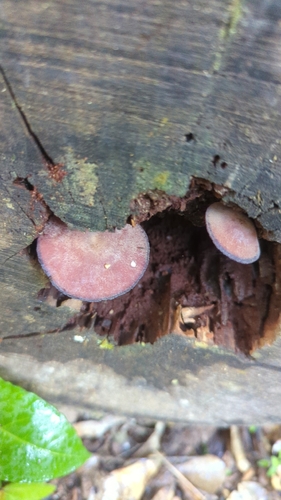
Purple-edged Lute
Callistosporium purpureomarginatum
Edibility unknown — do not eat -
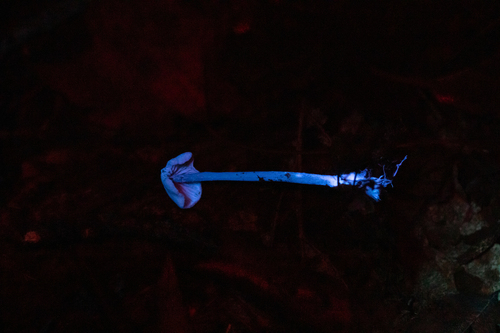
Callistosporium pseudofelleum
Edibility unknown — do not eat -
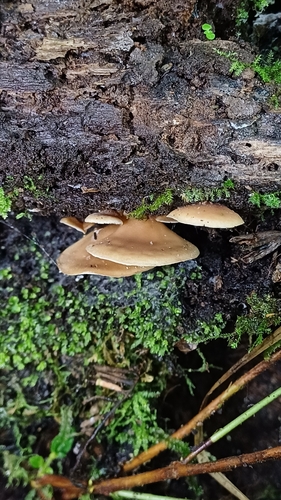
Callistosporium praemultifolium
Edibility unknown — do not eat -
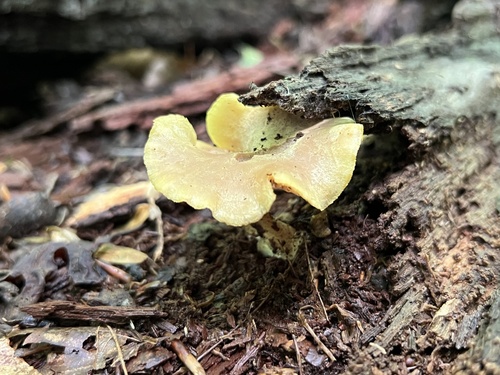
Callistosporium pinicola
Edibility unknown — do not eat - No photo yet
Callistosporium vinosobrunneum
Edibility unknown — do not eat -
Callistosporium hesleri
Edibility unknown — do not eat - No photo yet
Callistosporium palmarum
Edibility unknown — do not eat - No photo yet
Callistosporium elegans
Edibility unknown — do not eat
Never eat a wild mushroom based on this site or any app. See safety basics and the disclaimer.