

Amphibian Chytrid Disease
Batrachochytrium dendrobatidis Longcore, Pessier & D.K.Nichols
Also called: Bd chytrid fungus, Amphibian Chytrid, Bd, Chytrid Fungus, Chytrid frog fungi, Chytridiomycosis, Frog chytrid fungus, amphibian chytrid fungus
Edibility
Edibility unknown — do not eat
Never eat a wild mushroom based on this site or any app.
Photos
-

Photo: Brian Gratwicke. CC-BY. Source (inaturalist) -

Photo: Brian Gratwicke. CC-BY. Source (inaturalist) -
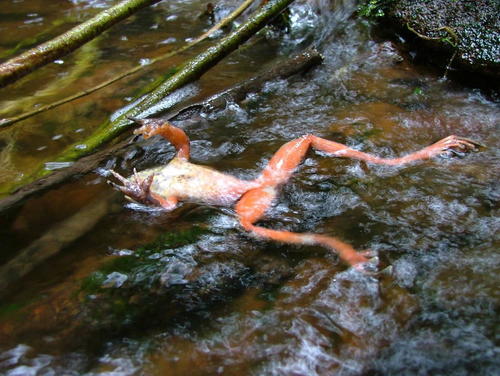
Photo: Photo credit: Forrest Brem. CC-BY. Source (inaturalist) -
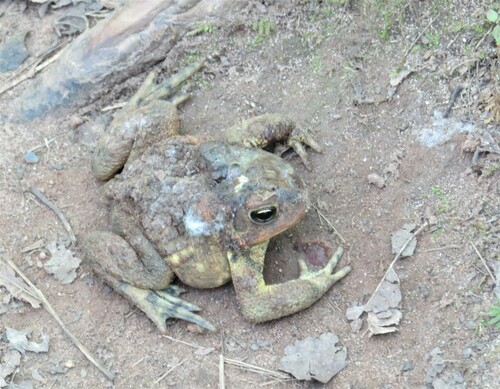
Photo: Marilynn Miller. CC-BY. Source (inaturalist)
Lookalikes
No lookalikes are recorded for this species yet. That does not mean there are none. Many mushrooms look alike, so never rely on appearance alone.
Season
When this species has been recorded, by month, from open-licensed US and Canada observations. It shows when people report it, not a guarantee it is fruiting.
The highlighted bar is the current month.
View season data as a table
| Month | Records |
|---|---|
| January | 0 |
| February | 0 |
| March | 2 |
| April | 1 |
| May | 0 |
| June | 1 |
| July | 1 |
| August | 2 |
| September | 19 |
| October | 40 |
| November | 0 |
| December | 0 |
Where it is found
States and provinces with the most records. Check the foraging rules for the place you plan to visit.
- California 1 records · Foraging rules
- Hawaii 1 records · Foraging rules
- Michigan 1 records · Foraging rules
About
Batrachochytrium dendrobatidis, also known as Bd or the amphibian chytrid fungus, is a fungus that causes the disease chytridiomycosis in amphibians. Since its discovery in 1998 by Lee Berger and species description in 1999 by Joyce E. Longcore, the disease devastated amphibian populations around the world, in a global decline towards multiple extinctions, part of the Holocene extinction. A recently described second species, B. salamandrivorans, also causes chytridiomycosis and death in salamanders. The fungal pathogens that cause the disease chytridiomycosis are known to damage the skin of frogs, toads, and other amphibians, disrupting their balance of water and salt and eventually causing heart failure, Nature reports. Some amphibian species appear to have an innate capacity to withstand chytridiomycosis infection due to symbiosis with Janthinobacterium lividum. Even within species that generally succumb, some populations survive, possibly demonstrating that these traits or alleles of species are being subjected to evolutionary selection.
From Wikipedia, CC BY-SA 4.0. Read the original article.
Recent finds
No community finds tagged with this species yet. Log a find.
Never eat a wild mushroom based on this site or any app. See safety basics and the disclaimer.