

Batkoa major
Batkoa major (Thaxt.) Humber
Edibility
Edibility unknown — do not eat
Never eat a wild mushroom based on this site or any app.
Photos
-

Photo: Andrew Conboy. CC-BY. Source (inaturalist) -
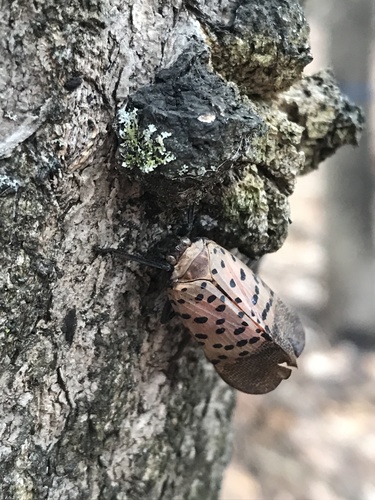
Photo: Andrew Conboy. CC-BY. Source (inaturalist)
Lookalikes
No lookalikes are recorded for this species yet. That does not mean there are none. Many mushrooms look alike, so never rely on appearance alone.
Season
When this species has been recorded, by month, from open-licensed US and Canada observations. It shows when people report it, not a guarantee it is fruiting.
The highlighted bar is the current month.
View season data as a table
| Month | Records |
|---|---|
| January | 0 |
| February | 1 |
| March | 0 |
| April | 0 |
| May | 0 |
| June | 0 |
| July | 0 |
| August | 0 |
| September | 0 |
| October | 0 |
| November | 0 |
| December | 0 |
Where it is found
States and provinces with the most records. Check the foraging rules for the place you plan to visit.
- North Carolina 1 records · Foraging rules
- Pennsylvania 1 records · Foraging rules
About
Batkoa major is a naturally occurring fungus that infects insects. Little is known about the pathogen. Found in the soil and belonging to the entomopathogenic fungi, the fungus spores attach to the insects' bodies upon contact. The fungus then enters the insect's body through weak spots in the outer cuticle or exoskeleton. The fungus then forms rhizoids to anchor its dying host to a tree, as spores start to develop on the insect's outer body and short-lived infective spores are ejected. The host insect dies between 4 – 7 days after being infected. Traces of the infective spores are hard to find in the environment. The fungus has been studied as an environmentally-friendly insecticide to control pests such as the invasive spotted lanternfly (Lycorma delicatula) in north-eastern North America. Other known targets include the pine beauty moth and the potato leafhopper.
From Wikipedia, CC BY-SA 4.0. Read the original article.
Recent finds
No community finds tagged with this species yet. Log a find.
More in the genus Batkoa
Never eat a wild mushroom based on this site or any app. See safety basics and the disclaimer.