

Aspergillus aculeatus
Aspergillus aculeatus Iizuka
Edibility
Edibility unknown — do not eat
Never eat a wild mushroom based on this site or any app.
Lookalikes
No lookalikes are recorded for this species yet. That does not mean there are none. Many mushrooms look alike, so never rely on appearance alone.
Season
When this species has been recorded, by month, from open-licensed US and Canada observations. It shows when people report it, not a guarantee it is fruiting.
The highlighted bar is the current month.
View season data as a table
| Month | Records |
|---|---|
| January | 0 |
| February | 0 |
| March | 0 |
| April | 0 |
| May | 0 |
| June | 0 |
| July | 0 |
| August | 0 |
| September | 9 |
| October | 0 |
| November | 0 |
| December | 0 |
Where it is found
States and provinces with the most records. Check the foraging rules for the place you plan to visit.
- Ontario 11 records · Foraging rules
About
Aspergillus aculeatus is a fungus species in the genus Aspergillus. It has been implicated as the causative agent in plant disease. A. aculeatus belongs to the group of black Aspergilli which are important industrial workhorses. A. aculeatus belongs to the Nigri section. Aspergillus aculeatus is considered to be a ubiquitous species that could be usually isolated from rotting fruits and soil. Morphological characteristics such a color, size, shape and ornamentation of conidia are crucial for the classification of strains of black-spored Aspergillus species. Modern biochemical and molecular identification techniques are helpful in the identification of Aspergillus isolates, as black-spored Aspergillus species may have significant variations in their morphological and physiological characteristics. Aspergillus can rapidly degrade cell walls of plants they infect, and isolates of A. aculeatus have been used to produce a number of important industrial enzymes, including cellulases, hemicellulases and proteases. These by-products are broadly used in the food and feed industries. Due to its industrial value, the biochemical and catalytic properties of several hydrolases from A. aculeatus have been extensively studied. Also, structural studies using X-ray crystallography have been carried out on several polysaccharide degrading enzymes from Aspergillus aculeatus. (Luis M. Chong L.) The genome of A. aculeatus was sequenced and published in 2010. The genome assembly size was 36.01 Mbp.
From Wikipedia, CC BY-SA 4.0. Read the original article.
Recent finds
No community finds tagged with this species yet. Log a find.
More in the genus Aspergillus
-
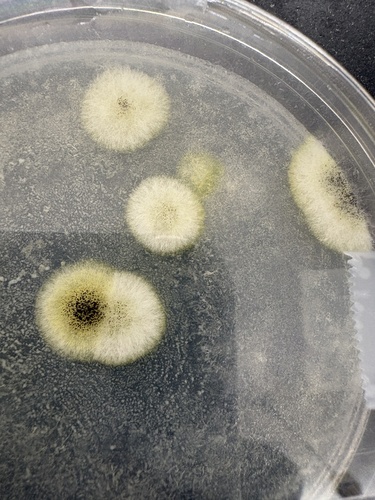
Black Mold
Aspergillus niger
Edibility unknown — do not eat -
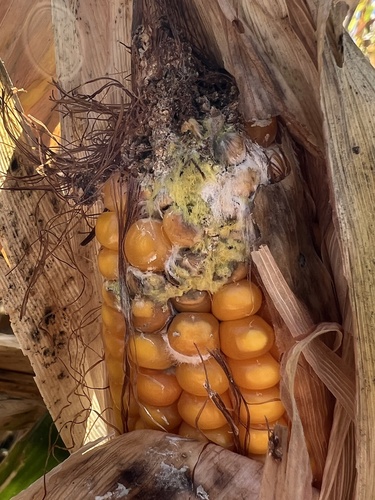
Aspergillus flavus
Edibility unknown — do not eat -

Aspergillus fumigatus
Edibility unknown — do not eat - No photo yet
Aspergillus amstelodami
Edibility unknown — do not eat - No photo yet
Aspergillus insuetus
Edibility unknown — do not eat - No photo yet
Aspergillus fumigatiaffinis
Edibility unknown — do not eat - No photo yet
Aspergillus glaucus
Edibility unknown — do not eat - No photo yet
Aspergillus caesiellus
Edibility unknown — do not eat
Never eat a wild mushroom based on this site or any app. See safety basics and the disclaimer.