

Tiny Button Lichen
Amandinea punctata (Hoffm.) Coppins & Scheid.
Edibility
Edibility unknown — do not eat
Never eat a wild mushroom based on this site or any app.
Photos
-
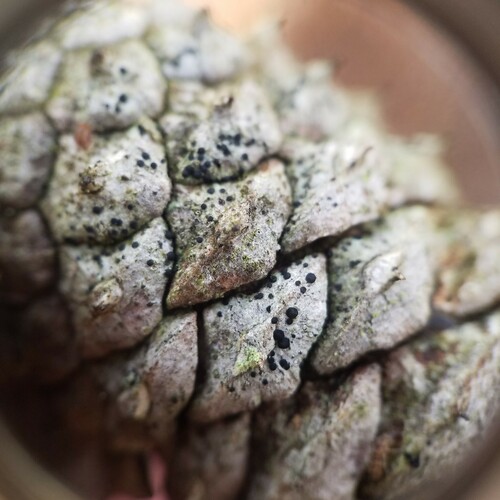
Photo: Leila Dasher. CC-BY. Source (inaturalist) -
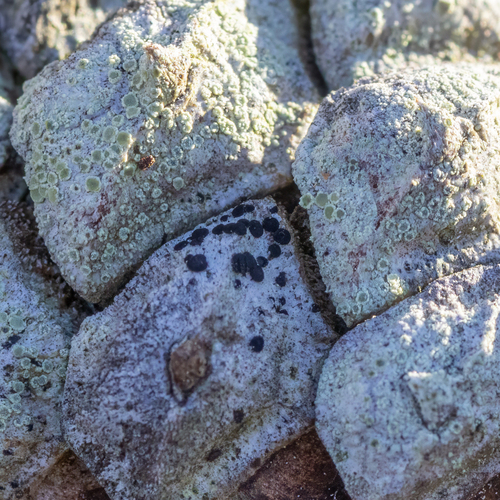
Photo: Dan Vickers. CC-BY. Source (inaturalist) -
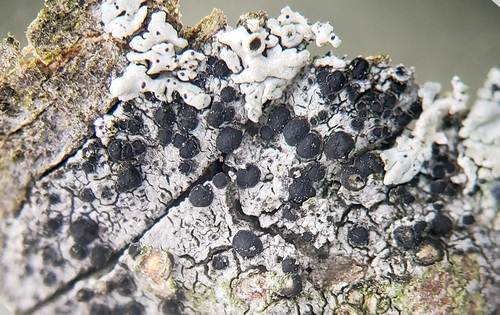
Photo: David Bird. CC0. Source (inaturalist) -
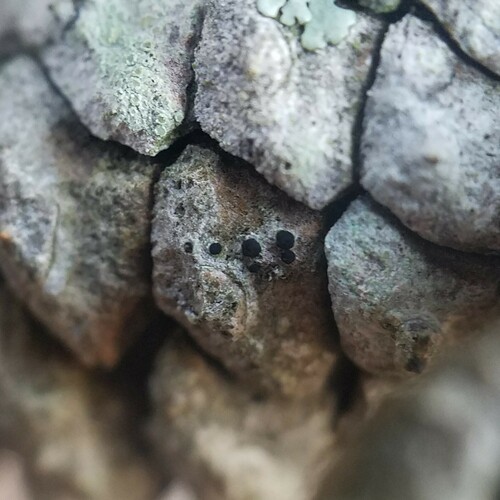
Photo: Leila Dasher. CC-BY. Source (inaturalist)
Lookalikes
No lookalikes are recorded for this species yet. That does not mean there are none. Many mushrooms look alike, so never rely on appearance alone.
Season
When this species has been recorded, by month, from open-licensed US and Canada observations. It shows when people report it, not a guarantee it is fruiting.
The highlighted bar is the current month.
View season data as a table
| Month | Records |
|---|---|
| January | 59 |
| February | 37 |
| March | 158 |
| April | 239 |
| May | 271 |
| June | 367 |
| July | 411 |
| August | 352 |
| September | 186 |
| October | 160 |
| November | 79 |
| December | 82 |
Where it is found
States and provinces with the most records. Check the foraging rules for the place you plan to visit.
- California 235 records · Foraging rules
- Minnesota 223 records · Foraging rules
- Ontario 197 records · Foraging rules
- Massachusetts 154 records · Foraging rules
- South Dakota 147 records · Foraging rules
- Iowa 141 records · Foraging rules
- Colorado 94 records · Foraging rules
- North Carolina 87 records · Foraging rules
- Michigan 84 records · Foraging rules
- North Dakota 79 records · Foraging rules
- British Columbia 68 records · Foraging rules
- Maine 66 records · Foraging rules
- Kansas 57 records · Foraging rules
- Washington 54 records · Foraging rules
- Wisconsin 50 records · Foraging rules
Show 48 more
- Nebraska48 records
- Georgia48 records
- Florida48 records
- New York45 records
- Quebec41 records
- Illinois41 records
- Louisiana39 records
- Texas38 records
- Oregon37 records
- Tennessee37 records
- Pennsylvania35 records
- New Mexico33 records
- Wyoming32 records
- New Jersey29 records
- Missouri28 records
- South Carolina28 records
- Arizona27 records
- Alabama27 records
- Arkansas27 records
- Idaho25 records
- Alberta25 records
- Alaska24 records
- Maryland24 records
- Oklahoma20 records
- Virginia20 records
- Connecticut16 records
- Vermont15 records
- Manitoba15 records
- Yukon15 records
- Saskatchewan14 records
- Utah11 records
- Northwest Territories11 records
- Montana10 records
- Nunavut10 records
- Newfoundland and Labrador10 records
- New Brunswick10 records
- Indiana9 records
- Ohio9 records
- New Hampshire8 records
- Nevada6 records
- Nova Scotia6 records
- Kentucky4 records
- Mississippi4 records
- West Virginia3 records
- District of Columbia1 records
- Hawaii1 records
- Prince Edward Island1 records
- Rhode Island1 records
About
Amandinea punctata (tiny button lichen) is a crustose brown to gray lichen that grows on wood and rock around the world. It grows on, not in the wood (epiphytic). It prefers bark that is acidic. In California, it is among the most common crustose lichens occurring on trees. Sometimes its thallus is absent, and branches may be covered in its lecideine apothecia. Because of its tolerance of low humidity, it is one of the few epiphytic lichens growing on trees in California deserts, where it commonly grows on the old, dry wood of junipers, and sometimes fallen pinyon pines and oaks, or on their dead branches. Compared to other lichens, it is tolerant of air pollutants and other toxins such as NO2 and SO2.
From Wikipedia, CC BY-SA 4.0. Read the original article.
Never eat a wild mushroom based on this site or any app. See safety basics and the disclaimer.